

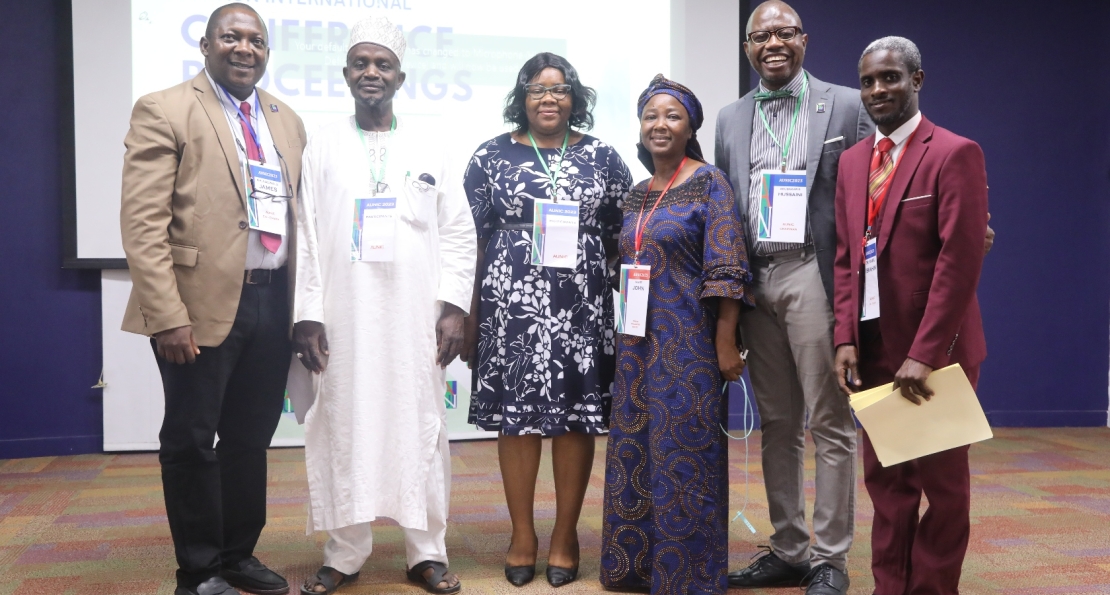
At a time when Africa’s development challenges demand bold ideas and practical solutions, the American University of Nigeria (AUN) has steadily emerged as a convener of intellectual leadership and transformative dialogue. Over the past three years, the university’s flagship International Conference has grown into more than an academic tradition. It has become a vibrant platform where scholars, policymakers, security experts, and development practitioners gather to exchange ideas, interrogate pressing issues, and design pathways toward a more resilient future.
Rooted in the American model of liberal education but deeply committed to addressing Africa’s development challenges, AUN continues to demonstrate that universities can serve as catalysts for societal progress. Through its International Conference series, the institution has created a space where scholarship, policy and research intersects with real-world solutions.
Convened under the leadership of Provost and Vice President for Academic Affairs Prof. Paul Vita, and guided by Conference Chairman Dr. Abubakar Sadiq Hussaini alongside Co-Chair Dr. Adewale James, the conferences reflect a philosophy that scholarship must extend beyond theoretical discourse to produce tangible social impact.
The story of AUN’s International Conference begins in November 2023, when scholars from across Nigeria and beyond gathered to explore the theme “Research: A Tool for National Development and Innovation in the 21st Century.” The four-day gathering set an ambitious intellectual tone, emphasizing the role of evidence-based research in shaping Nigeria’s development agenda and strengthening Africa’s innovation ecosystem.
Delivering the opening keynote, Prof. Jimmy A. Reyes, of the University of Northern Iowa, USA spoke about the importance of global health systems and translational research. His remarks underscored the need for research that places human well-being at the center of innovation. “Research must move beyond publication metrics and become a living instrument of social change. In developing contexts, especially, research should answer the question: who benefits?” Reye’s asserted.
The global perspective continued with an address by Amed Demirhan, General Manager of the Barzani National Memorial in Iraq’s Kurdistan Region. Drawing from experiences in post-conflict reconstruction, Demirhan reflected on the restorative power of scholarship. “For nations emerging from conflict, research is not merely academic it is restorative. It helps societies remember responsibly and rebuild strategically.”
From Nigeria’s academic community, Prof. Odekunle Mathew Remilekun of Modibbo Adama University emphasized the need for stronger collaboration between universities and industry, urging institutions to position themselves at the center of national productivity. “Nigeria cannot innovate in isolation. Our universities must function as laboratories for national productivity,” he stated.
Equally compelling was the perspective of Özcan Asilkan, Professor and former Dean of AUN’s School of IT and Computing, who highlighted the urgency for African institutions to take ownership of technological innovation. “The Fourth Industrial Revolution demands that African universities design solutions, not merely import them.”
Across numerous technical sessions, scholars presented peer-reviewed research spanning health sciences, engineering, digital transformation, sustainable energy, governance reform, and entrepreneurship. The discussions reinforced a central idea: knowledge becomes meaningful only when it contributes to real societal progress.
While the 2023 conference celebrated research as a driver of development, the 2024 edition confronted a more immediate and urgent challenge. Held from 6–9 November 2024, the conference unfolded against the backdrop of persistent insecurity in Nigeria’s North-East, transforming the gathering into a strategic forum for dialogue on peacebuilding, governance, and policy reform.
Delivering the keynote address, Jude Momoh, Director of the Center for Peace and Conflict Studies at Modibbo Adama University, framed insecurity as a complex challenge that extends far beyond military confrontation. “Security challenges in the North-East are not merely military problems. They are socio-economic, psychological, and governance issues that require integrated research solutions,” he stated.
Within the AUN community, Lucky Imade emphasized the necessity of evidence-based policymaking in addressing security threats. “Research must inform public policy. Without evidence-based policymaking, security interventions become reactive rather than preventive.”
International perspectives further enriched the conversation. Patrick Fay, former Dean of AUN’s School of Arts & Sciences and former Irish Ambassador to Nigeria, highlighted the importance of cross-border academic collaboration in tackling global security challenges. Prof. Fay concluded that “Security challenges transcend borders. Academic partnerships are essential in developing counter-extremism strategies rooted in local realities.”
In another engaging session, Bill Hansen joined AUN alumnus Kingsley Jima to examine policy models from around the world that could inform Nigeria’s approach to conflict prevention and governance reform.
Hansen reflected on the unique role universities can play in addressing sensitive national questions. “Universities must serve as neutral grounds where sensitive issues can be debated rigorously and responsibly.”
Panels chaired by deans across AUN’s schools explored themes such as insurgency dynamics, youth radicalization, border governance, community policing, media narratives, and economic marginalization. The discussions were not merely academic exercises. Participants proposed practical frameworks, including community-based early warning systems and youth-driven economic empowerment initiatives.
By the time the conference reconvened in 2025, the conversation had expanded to address another dimension of Nigeria’s stability: the intersection between insecurity and food scarcity. In many parts of the country, these crises reinforce one another, creating a cycle that threatens both livelihoods and national stability.
Delivering the keynote address, Prof. Kaletapwa George Farauta, Deputy Governor of Adamawa State, highlighted the critical connection between agriculture and peace. “Food security is national security. A state that cannot feed its people cannot guarantee lasting peace.”
Agricultural innovation was also a central focus of the conference. Prof. D. T. Gungula emphasized that research must translate into practical improvements in farming systems. “Research must translate into improved seed systems, climate-smart agriculture, and rural empowerment. Without these, we only theorize solutions.”
Security insights were further deepened by Bashir Abubakar, former Chief Security Officer to late President Muhammadu Buhari, who warned that the food crisis and insecurity are deeply intertwined. “The food crisis fuels insecurity, and insecurity disrupts food systems. Addressing one without the other is strategically flawed.”
Adding to the multidisciplinary perspective, Kalep Bulus Filli stressed the importance of collaboration across academic and professional fields. “Economists, agronomists, engineers, and security experts must speak the same language. Multidisciplinary collaboration is no longer optional, it is essential.”
Throughout the 2025 conference, plenary discussions examined climate change, agribusiness resilience, rural banditry, supply chain disruptions, and humanitarian logistics. Participants were encouraged to develop policy briefs, agricultural innovation prototypes, and community engagement strategies, reflecting a growing shift from theoretical debate to applied solutions.
Taken together, the three conferences tell a compelling story of intellectual progression. Beginning with research as a catalyst for development, moving through the urgent realities of security and governance, and culminating in the intertwined challenges of food security and stability, the AUN International Conference series mirrors the evolving priorities of Nigeria and the African continent.
By convening voices from academia, government, and the security sector, AUN has created a rare intellectual space where ideas are not only debated but translated into strategies for action. In doing so, the university continues to demonstrate that when knowledge is responsibly mobilized, it becomes a powerful force for national transformation and continental progress.
Reported by: Udoh Victoria Clement.