

Welcome to the School of Engineering Dean’s Office!
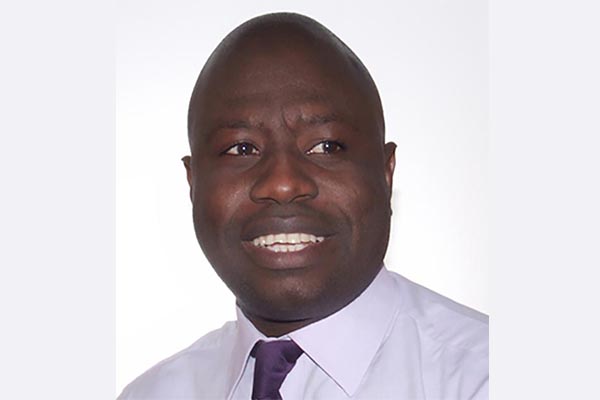
My dear students,
I welcome you to the School of Engineering at the American University of Nigeria (AUN). As you begin your academic journey, I strongly encourage you to make the School of Engineering catalog your primary guide. It outlines the philosophy, objectives, academic structure, codes of conduct, and five year course plans of our engineering programs, in line with the National Universities Commission (NUC) requirements.
While science focuses on understanding, engineering focuses on doing. Engineering is about identifying real problems and designing practical solutions. At AUN, you will develop strong problem-solving, design, and analytical skills through a balance of theory and hands-on practice, supported by world-class faculty and modern laboratories.
Our programs emphasize innovation, entrepreneurship, and sustainable development. You will benefit from small class sizes, a fully digital learning environment, study abroad opportunities through our global partners, and an active student life. As a student of the School of Engineering, you are also a member of the Engineering Students’ Society (ESS), dedicated to solving societal challenges locally and globally.
I once again welcome you to the School of Engineering and wish you a rewarding and successful academic experience at AUN.
Abubakar Sadiq Hussaini, M.Sc., Ph.D.
Dean, School of Engineering
Office Location: SOE Ground Floor
Email: soe.dean@aun.edu.ng
The Office of the Dean for the School of Engineering provides leadership and oversight for the School’s academic and administrative affairs. Appointed by the President, the Dean reports to the Provost and serves a renewable two-year term, guiding the School’s vision and operations. As SOE’s leader, the Dean fosters collaboration, ensures effective governance, and upholds academic standards.
The Office also oversees the certification of qualified students, presenting them for the conferment of degrees and supporting the School’s commitment to academic excellence, and fosters a culture of research, innovation, and service across its faculty.
Dean’s Staff
-
Dean, School of Engineering
Abubakar Sadiq Hussaini, Ph.D.
Email: ash@aun.edu.ng
Office Location: SOE Dean’s Suite -
Associate Dean and Graduate Studies Coordinator, School of Engineering
Salihu Adamu Girei, Ph.D.
Email: adamu.salihu@aun.edu.ng
Office Location: SOE 112
SOE’s programs are organized across five academic departments. For questions about our programs, faculty research, or services, please contact the Dean or any of the department chairs:
Academic Departments
-
Department of Chemical Engineering
Salihu Adamu Girei, Ph.D. - Chair
Email: adamu.salihu@aun.edu.ng
Office Location: SOE 112 -
Department of Civil Engineering
Abubakar Sadiq Hussaini, Ph.D. – Acting Chair
Email: ash@aun.edu.ng
Office Location: SOE Dean’s Suite -
Department of Computer Engineering
Sirajdin Olagoke Adeshina, Ph.D. - Chair
Email: sirajdin.adeshina@aun.edu.ng
Office Location: SOE 203 -
Department of Electrical and Electronics Engineering
Olusegun Ogundapo, Ph.D. - Chair
Email: olusegun.ogundapo@aun.edu.ng
Office Location: SOE 114 -
Department of Telecommunications Engineering
Abubakar Sadiq Hussaini, Ph.D. - Chair
Email: ash@aun.edu.ng
Office Location: SOE Dean’s Suite
Dean’s Office Staff
-
Ms. Sibo Febel - Executive Assistant
Email: sibo.febel@aun.edu.ng -
Mr. Adamu Bitrus Emmanuel - Administrative Assistant
Email: adamu.bitrus@aun.edu.ng
Information for Current Students
If you would like a copy of the current undergraduate or graduate academic catalog, please write soe@aun.edu.ng.