

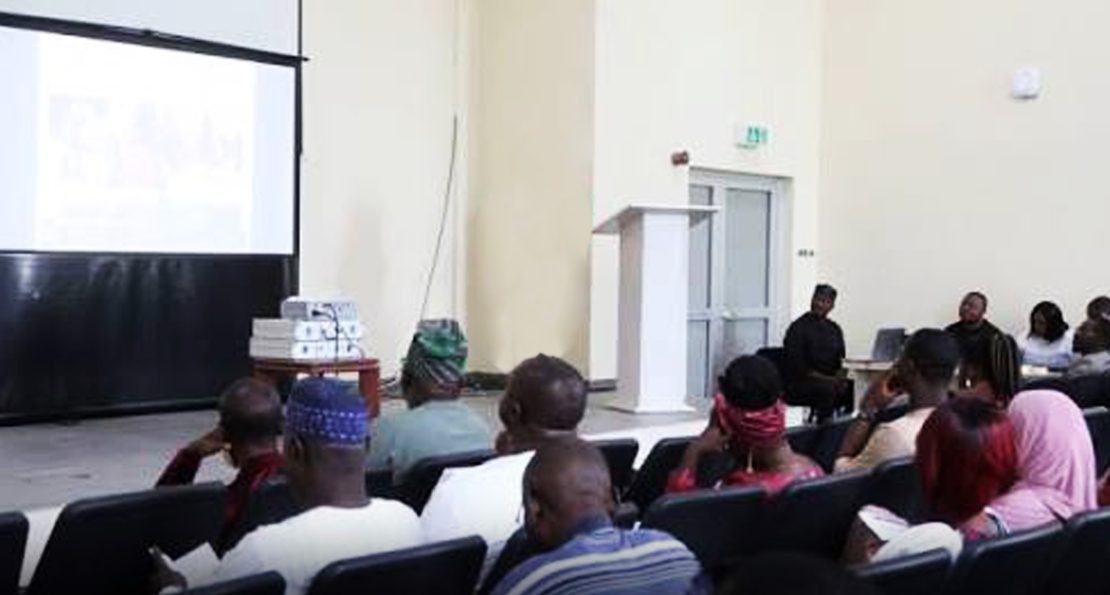
The American University of Nigeria (AUN) has challenged its staff to think beyond their job descriptions, take ownership of workplace challenges, and focus on measurable results as the university works to build a stronger culture of high performance and organizational excellence.
The call was made during a two-day staff training organized by the Human Resources and Planning Department on August 10 and 11, 2026, at the School of Law Lecture Auditorium for managers, professionals, and Administrative staff.
The training focused on strengthening staff capacity, improving workplace productivity, and fostering a culture of accountability, innovation, and continuous professional development. It featured sessions on "Entrepreneurial Thinking and Intrapreneurship in Organizational Excellence" and "High-Performance Workplace Habits."
Speaking on entrepreneurial thinking and intrapreneurship, Vice President for Finance Mrs. Nnena Mosugu urged staff to think like owners and to see themselves as active contributors to the university's success rather than as employees who wait for management to solve problems.
Using the Titanic as an analogy, Mrs. Mosugu encouraged staff to see themselves as members of the crew rather than as passengers who sit back and wait for others to take responsibility when challenges arise. "The crew has a shared responsibility for the success of the ship," she said, stressing that every employee has a role to play in identifying challenges, finding solutions, and contributing to the university's progress.
Mrs. Mosugu noted that AUN had experienced a challenging period before 2020 but subsequently recorded significant growth, including an increase of more than 100 per cent in revenue. She commended staff whose contributions helped drive the university's development and stressed that sustaining that progress requires commitment and collaboration across all departments.
She explained that entrepreneurship goes beyond starting a business; it involves identifying problems and opportunities, developing creative solutions, and creating value. Intrapreneurship, she added, applies these same principles within an organization, encouraging employees to take initiative, leverage available resources, and develop solutions to existing challenges.
Mr. Mosugu urged staff to move away from the "it is how we have always done it" mindset and instead look for more effective ways of accomplishing their responsibilities. "When you put your mind to work, a solution comes," she emphasized.
The second session, on high-performance workplace habits, challenged staff to focus not merely on being busy but on producing meaningful results. Participants were encouraged to prioritize important tasks, manage their time and energy effectively, communicate clearly, receive and provide timely feedback, and follow through on their responsibilities.
The training identified procrastination, poor time management, ineffective communication, lack of accountability, constant multitasking, and resistance to feedback as habits that can undermine workplace performance.
Staff were encouraged to set clear goals, prioritize value-driven tasks, minimize distractions, and create periods of uninterrupted focus. They were also advised to adopt an outcome-focused approach by asking not only what they were doing but what results they intended to achieve.
Accountability, integrity, professionalism, proactivity, resilience, and teamwork were identified as essential qualities for high-performing employees.
The training also addressed the growing role of Artificial Intelligence (AI) in the workplace. While recognizing AI as a useful tool for generating ideas, providing information, and enhancing productivity, participants were reminded that technology does not replace human judgement, accountability, or professional responsibility.
The program provided staff with an opportunity to interact, exchange ideas, and reflect on practical ways to improve individual and departmental performance.
The AVP for Human Resources and Planning, Hajiya Faisatu Abubakar, said the training forms part of AUN's commitment to developing a high-performing workforce equipped with the knowledge, skills, and mindset needed to respond effectively to the changing demands of the higher education sector.
Reported by Joshua Joy Jiya