

At the American University of Nigeria (AUN), education extends far beyond lectures and exams. Through community engagement, interdisciplinary learning, and leadership development, the University prepares students to apply knowledge where it matters most, in real communities facing real challenges. Fourth-year Law major Bilkisu Abdulkadir Alkali exemplifies how AUN’s Development University model shapes students into thoughtful problem-solvers and compassionate change-makers.
From her earliest days at AUN, Bilkisu found her sense of purpose reinforced by an environment that connects academic study with social responsibility. “I believe that a person’s ultimate purpose in life is to give back to others in whatever capacity one can,” she says. This mindset was cultivated through coursework and service-learning opportunities embedded in the University’s curriculum, encouraging students not only to understand development challenges but to engage directly with communities.
Bilkisu’s commitment quickly translated into action across various initiatives, from conflict resolution and water access projects in Bole to prison outreach programs and literacy interventions. She approached these experiences not as acts of charity, but as opportunities to listen, learn, and respond to the actual needs of the community. “Nothing causes harm like a preconceived notion,” she reflects. “The best ways to approach aid are by reaching out to the community first and hearing from them.” This philosophy mirrors AUN’s emphasis on participatory development, where solutions emerge from dialogue rather than prescription.
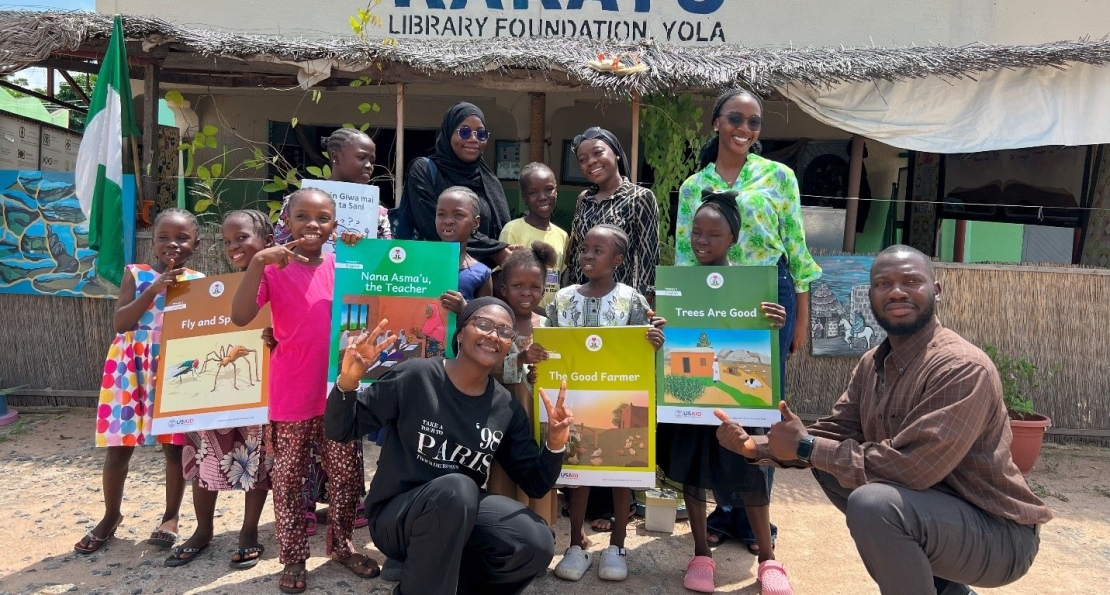
A clear example of this approach is her leadership in the Karatu Library Project. Initially, Bilkisu planned to donate books, believing they were the most pressing need. Field experience, however, reshaped her perspective. Discovering that the library required volunteers more than materials, she mobilized her peers through her role as Vice President of the Honor Society, organizing weekly reading sessions with children. “My initial expectation was that books were what these children needed,” she says. “But I learned that the kind of books mattered, and that engagement was key.”
The project evolved to include literacy mentoring and chess activities that fostered confidence and critical thinking. Her ability to adapt reflects skills cultivated at AUN, critical analysis, research, and reflective practice, which enabled her to align her efforts with the realities on the ground. Lessons learned in coursework about cultural context and local relevance also guided these decisions, ensuring the project met actual community needs.
Bilkisu’s Law studies further strengthened her problem-solving capacity. Classroom instruction in analytical reasoning and resilience influenced her approach to logistical setbacks and unexpected obstacles. “On your first day in a law class, you’re told that with every general rule, there is always an exception,” she recalls. “That taught me that no matter how bleak circumstances look, there’s always a way forward.” This mindset helped her reorganize volunteers, troubleshoot project challenges, and personally assist in preparation when community resources fell short.
Her training at AUN also prepared her for complex intercultural engagement. During early field visits in Bole, tensions arose with residents wary of outside intervention. Drawing on communication and leadership skills developed through teamwork and service training, Bilkisu helped navigate these challenges, ultimately completing a borehole project that improved access to clean water. “Sometimes you encounter resistance and pushback,” she reflects. “Your job is to mitigate the fallout and work toward understanding.”
Through these experiences, Bilkisu gained insights that textbooks alone could not provide. She learned to prioritize pressing community needs, whether it was malaria medication for prison inmates or digital literacy training for rural youth facing computer-based exams. Each engagement reinforced adaptability, humility, and a mindset oriented toward solutions, core principles at AUN.
Looking ahead, Bilkisu sees her career as an extension of the values nurtured at AUN. Exposure to diverse development frameworks, organizational structures, and community realities strengthened her commitment to service-oriented leadership. “These experiences have shown me how possible it is to create change,” she says. “Often, a small action such as volunteering can have a grand effect.” Her closing reflection captures both her personal resolve and the University’s mission: “If you were to rip me apart… all you would find is a heart fueled by the desire to see a better, kinder world.”
Bilkisu’s story illustrates the unmistakable connection between preparation and impact. Through academic rigor, community-centered pedagogy, and leadership opportunities, AUN equips students not only with knowledge but with the mindset and skills to act on it. In a university where classrooms have no walls, learning does more than educate, it empowers students to transform the world around them.